Websites for coaches, consultants & therapists — UK-wide
A site in your voice — with the call one tap away.
Designed and built by one senior person: credibility in the first screen, a discovery call from every page, content you publish yourself, and HTML that Google and the AI assistants read as clearly as your clients do. Fixed price, live in weeks, owned by you.
The proof
Two brands, one founder, nothing shared.
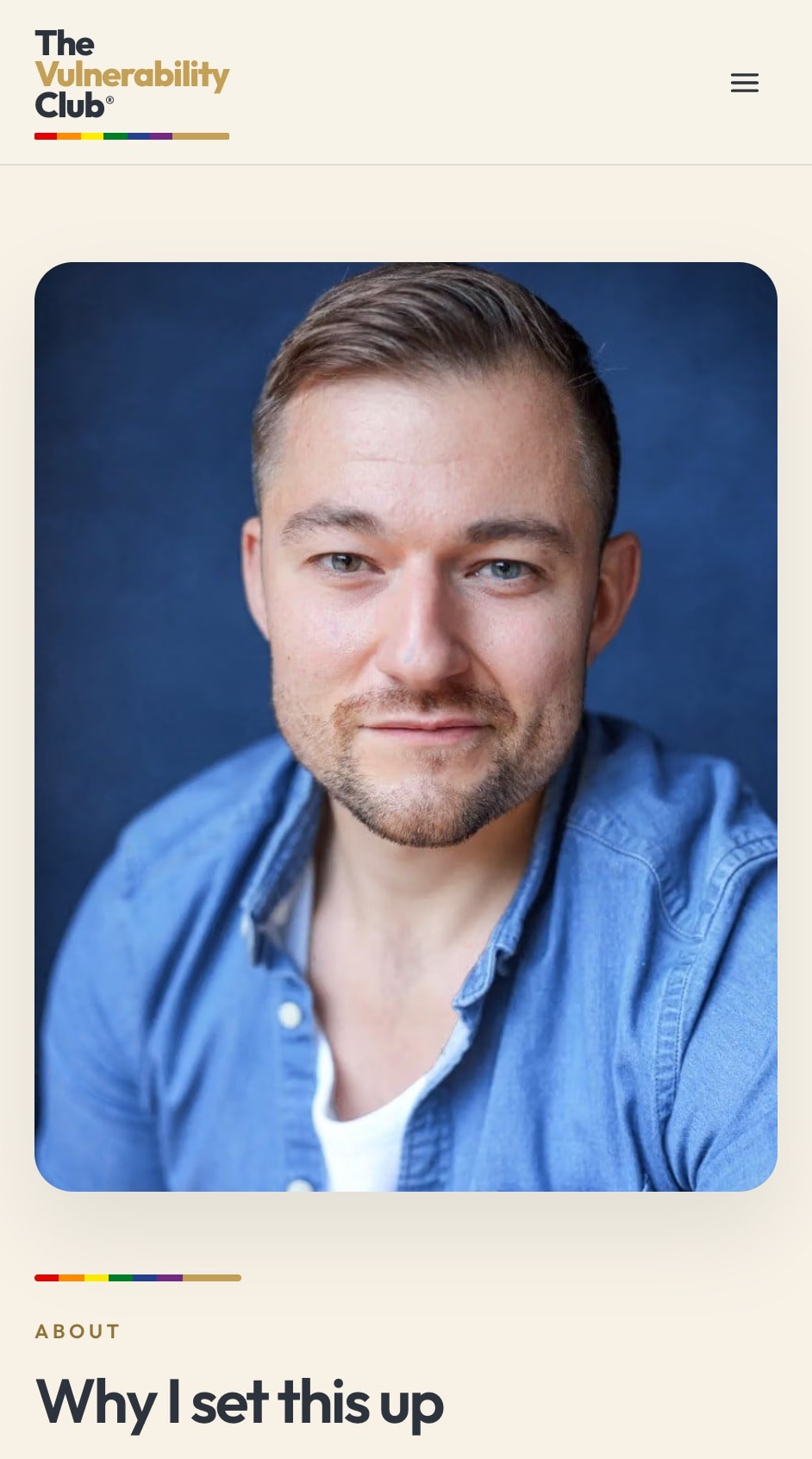
Max Wilson left the Bar to coach high-achieving men on self-leadership. The studio gave his practice an editorial site he runs himself — sixteen pages, a blog and testimonials he publishes without touching code, and a discovery call one tap from everywhere — then built his second brand, The Vulnerability Club®, with its own voice, palette and audience.
Read the Max Wilson case study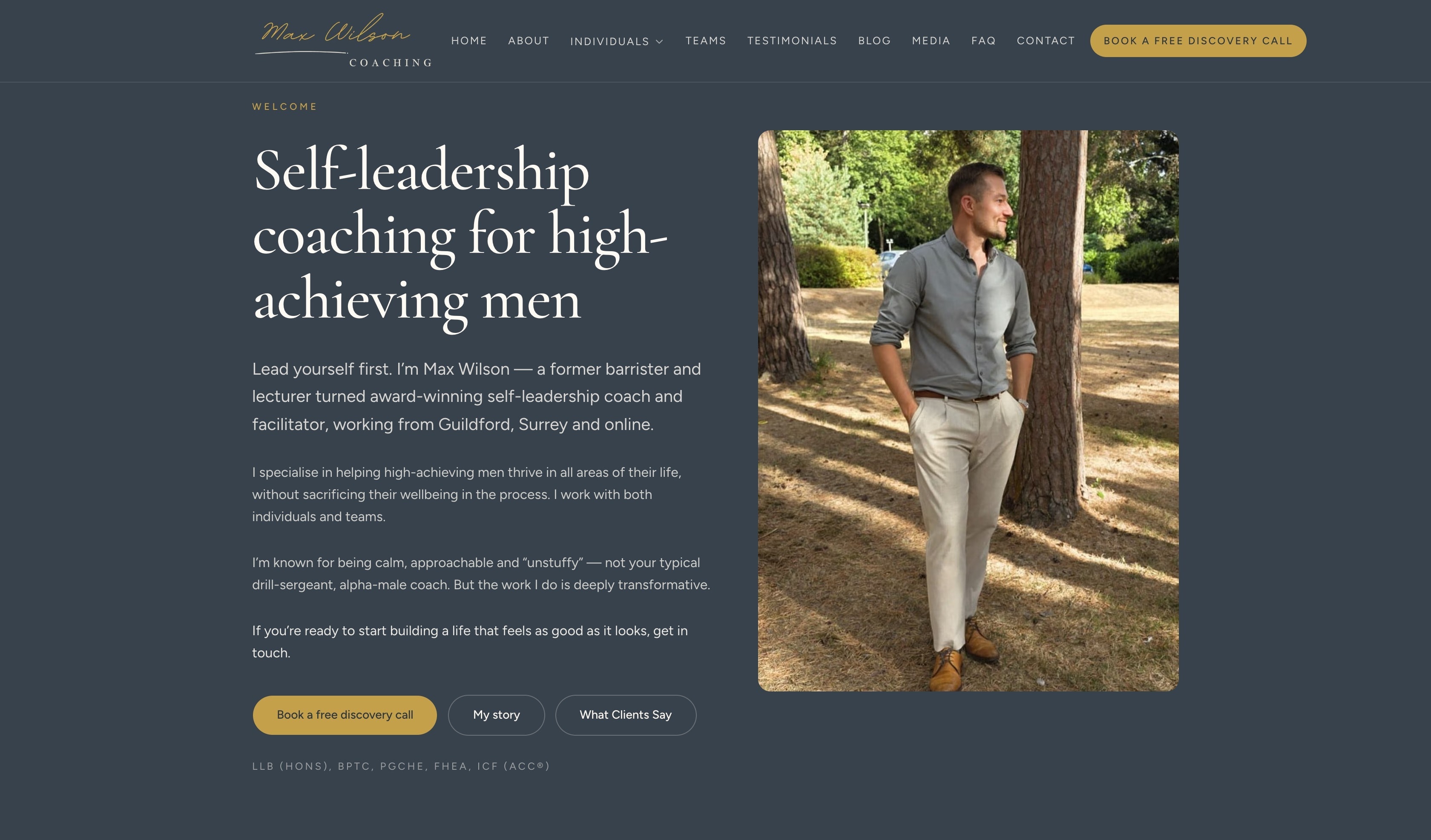
What the site has to do
Six things a coaching site cannot skip.
Credibility in the first screen.
Who you are, who you help and what changes for them — said plainly, set in type that looks like it belongs to someone worth listening to. Your clients read carefully and judge quickly; the site has to survive that.
One action, everywhere.
A discovery call, a consultation, a first session — whatever the first step is, it sits one tap from every page, wired to the booking tool you already use, and you can change the link yourself.
Proof where it is read.
Testimonials next to the claims they support, not on a page nobody visits. Named, dated where the client allows it, and marked up so a search engine or an assistant can attribute them.
Publish without a developer.
Blog posts, testimonials, a new programme, a changed price: edited in a CMS you control and live in minutes. Your practice changes month to month; the site has to keep up without a ticket.
Readable to Google and the assistants.
Static pages, question-shaped headings, structured data for you as a person and for what you offer — so a search for your name, your method or your kind of coaching finds you and describes you correctly.
Fast on a phone.
Most first visits come from a link in a message or a post, opened on a phone in a spare minute. The site loads instantly, reads well one-handed and gets to the point.
In their words
“He took the colours, logo and ideas I already had and turned them into something that looks exactly as I’d imagined it — only better.”
“He didn’t just make the website look better — he completely elevated it.”
Questions coaches ask
Straight answers, before you enquire.
- What makes a good coaching website?
- A good coaching website gets a reader from “who is this?” to a booked discovery call with nothing in the way. That means credibility in the first screen — who you are, who you help, what changes for them — proof next to the claims, one clear action on every page, and writing in your own voice rather than the industry’s. Underneath, it means clean HTML that Google and AI assistants can read, because that is what decides whether people who have not heard of you find you at all.
- How much does a coaching website cost?
- Every price is published. A Launch site — up to five pages, custom designed, live in a week — is £3,500. The standard build for an established practice is Business at £8,500: up to twelve pages, a CMS so you can publish yourself, a booking flow wired into your calendar tool, and the search groundwork so assistants can read and cite the site. Both are fixed fees agreed in writing before work starts, with design included. The price list.
- How long does it take?
- A Launch site goes from brief to live in about a week; a Business build in about four. The studio is one senior person with no handoffs, so there is no agency queue — and a fast-track option puts an urgent build at the front of the line for an additional fee.
- Can I edit the site myself?
- Yes. Business builds ship with a CMS — pages, blog posts, testimonials, programmes and prices are all yours to change without touching code or waiting on anyone. Max Wilson has published from the day his site went live and has never needed a developer since.
- Can clients book a discovery call from the site?
- Yes. The call — or whatever your first step is — is built in as the single action every page leads to, connected to the scheduling tool you already use, whether that is Calendly, Cal.com or a link in your calendar. If you change tools, you change the link yourself.
- Will people find me on Google and in ChatGPT?
- The site is built so they can. Every page ships as static HTML that Google and the assistants can read without running JavaScript, with headings shaped like the questions people actually ask and structured data describing you, your practice and what you offer. Nobody can promise a particular ranking or a particular answer — anyone who does is guessing — but the site can be made readable, quotable and consistent everywhere your name appears, which is what those systems select for. How the search programme works.
- Do you work with therapists, consultants and other practitioners?
- Yes. The shape is the same for a coach, a consultant, a therapist or a practitioner with a personal brand: one person, a clear promise, proof, and one action. The studio has built two distinct sites for the same founder — a coaching practice and a membership community for GBT+ men — sharing nothing visible, because the work starts from the client, not a template.
- Who owns the website?
- You do, completely. The code, the domain, the content and the search value it earns are yours, with no platform lock-in and nothing to pay to leave. After launch you can take a care plan for hosting, monitoring and changes, or run it yourself — it is yours either way.
Your practice, in your voice?
Tell me what you do and who it is for. I reply personally, usually within a day — and I’ll say honestly whether a Launch or a Business build is the right size.